Nolan's 'The Odyssey' leverages IMAX to highlight the personal cost of Odysseus's journey home from war.
By Ligo Lens Editorial · July 15, 2026
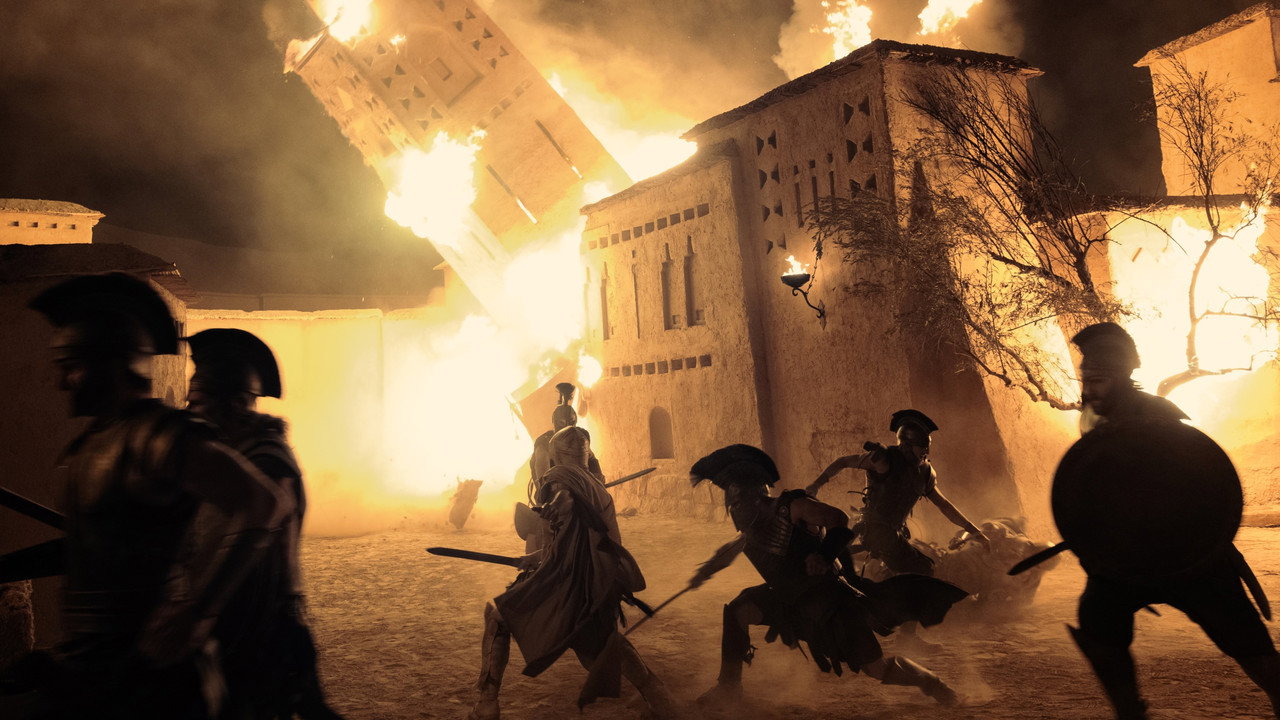
Christopher Nolan's decision to shoot 'The Odyssey' entirely on IMAX film cameras is a deliberate choice that amplifies the epic's grand scale while focusing on the intimate personal journey of its protagonist. This approach transforms the ancient narrative from a series of mythological trials into a deeply personal exploration of Odysseus's internal conflict.
By employing the largest film format, Nolan juxtaposes the vastness of the landscapes and the enormity of the challenges with the isolation and introspection of Odysseus. This echoes his previous work, where expansive settings often serve to highlight the smallness of human aspirations and the weight of personal stakes. In 'The Odyssey', the IMAX format suggests that Odysseus's true battle is not with external forces, but with the man he has become after the war.
The casting of Matt Damon, known for roles that blend heroism with vulnerability, indicates a layered portrayal of Odysseus. This suggests a focus on the internal strife of a man torn between his legendary status and the haunting memories of war. Damon's presence hints at a narrative that prioritizes the psychological depth of Odysseus over the spectacle of his adventures.
The ensemble cast, including Anne Hathaway and Tom Holland, points to a dynamic exploration of familial bonds strained by absence and expectation. Hathaway's involvement suggests a complex portrayal of Penelope, potentially challenging her traditional role as the waiting wife. These casting choices imply a narrative that emphasizes the human relationships at the heart of the epic.
Nolan's adaptation of 'The Odyssey' into a contemporary cinematic context appears to engage with enduring themes of identity and homecoming. The original epic's episodic structure presents a challenge in maintaining narrative coherence while preserving its mythic essence.
By focusing on Odysseus's internal journey, the film seems poised to reflect on modern notions of identity and the cost of heroism. This approach aligns with Nolan's interest in characters who confront their own limitations and the consequences of their choices, as seen throughout his filmography. The adaptation thus serves as both a homage to the classic tale and a commentary on the enduring human struggle for self-understanding.
A significant risk in Nolan's adaptation lies in translating the sprawling, episodic nature of 'The Odyssey' into a coherent cinematic narrative. The epic's original form allows for a breadth of exploration that a single film may struggle to encapsulate, potentially sacrificing depth for breadth.
This challenge is compounded by the myth's inherent scale, which could overshadow the intimate character studies that are Nolan's hallmark. Balancing these elements requires a deft hand to ensure that the film does not lose the emotional impact of Odysseus's journey amid the spectacle of its mythological elements. The project thus stands at the intersection of epic storytelling and intimate human drama, a balance that Nolan's previous work suggests he is uniquely suited to navigate.